How much annual leave is due in Hungary, and how is it given?
Under the Hungarian Labour Code basic annual leave is twenty working days, with extra days for age and for children (Mt. §§ 116-118). The employer grants leave after hearing the employee, but seven working days a year must be given when the employee asks, and the dates must be communicated at least fifteen days in advance (Mt. § 122).
Updated:
How much leave is due in a year?
| Part | How much | Where it is |
|---|---|---|
| Basic leave | 20 working days | § 116 |
| Extra leave by age | 1 day at 25, rising in steps to 10 days at 45 | § 117 |
| For children (under 16) | 1 child: 2, 2 children: 4, more than two: 7 working days in all | § 118(1) |
| For a child with a disability | 2 more working days per child | § 118(2) |
| Young employee | 5 working days, last in the year they turn 18 | § 119(1) |
If employment started or ended during the year, a proportional share is due, and a fraction of half a day or more counts as a whole working day (§ 121). Paternity and parental leave follow separate rules (§ 118(4) and § 118/A).
Who decides when someone goes on leave?
Details
- The employer grants the leave, after hearing the employee first (§ 122(1)).
- Seven working days a year, in at most two parts, must be given when the employee asks, except in the first three months of employment; the request must be made at least fifteen days before (§ 122(2)).
- Unless agreed otherwise, once a year the employee must be free of work for at least fourteen consecutive days (§ 122(3)).
- The dates must be communicated at least fifteen days before the leave starts (§ 122(4)).
- Leave cannot be paid out instead, except when employment ends (§ 122(5), § 125).
By when must this year's leave be given?
Details
As a rule in the year it falls due (§ 123(1)). If employment started on or after 1 October, it may be given until 31 March of the next year (§ 123(2)); if it could not be given for a reason on the employee's side, within sixty days of that reason ending (§ 123(3)). This is general information based on the Act as read on 16 October 2026, not legal advice; a collective agreement may depart from some rules.
How do you keep track of leave?
Details
The employer must keep a record of the length of leave taken (§ 134(1)(c)). In practice that means, per person, the entitlement and the days taken and left, counted in working days, so that a public holiday uses up no leave.
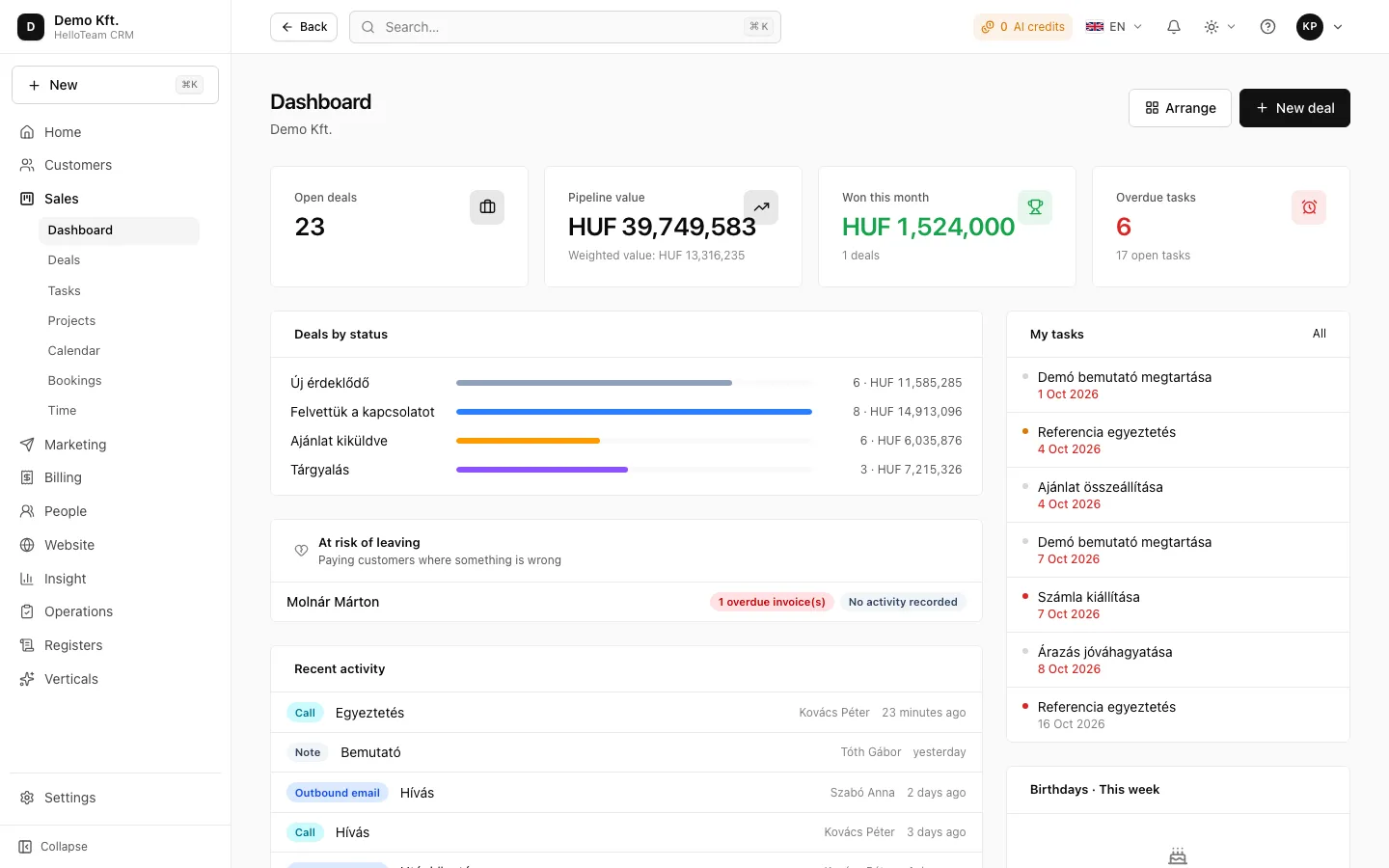
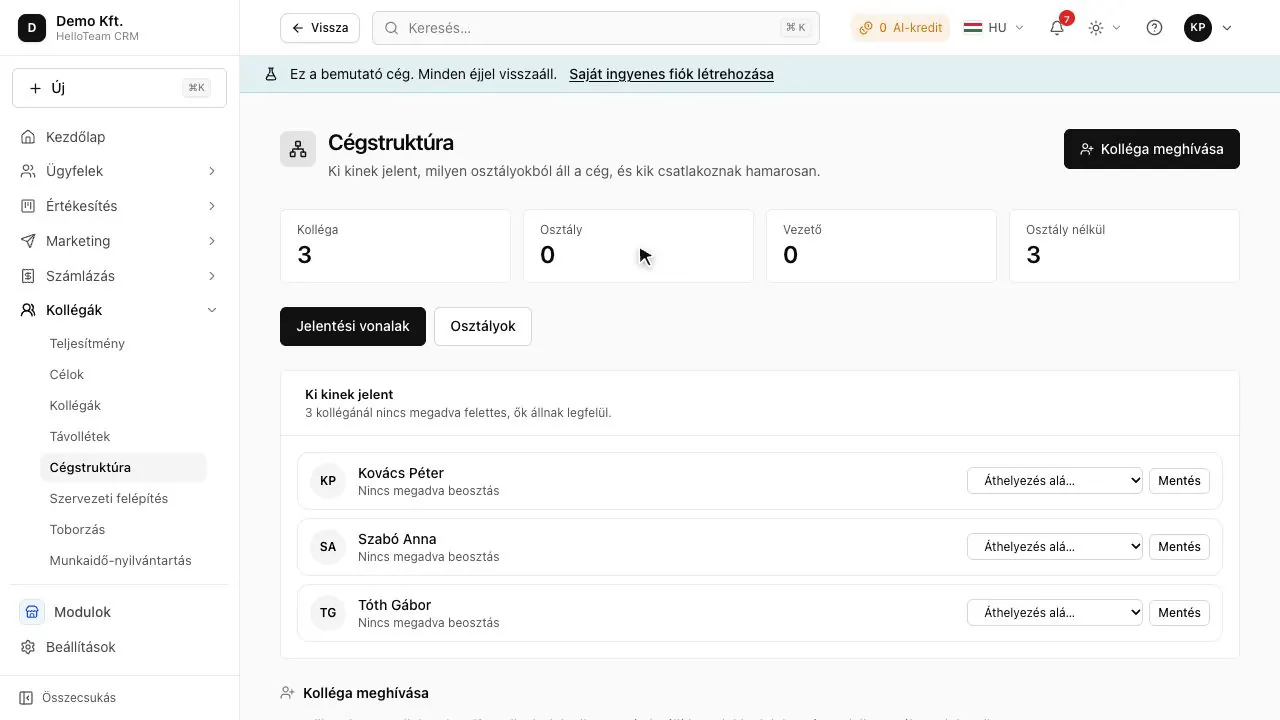
In HelloCRM's People module a leave request is approved by a manager; nobody approves their own, administrators included. Working days are counted when the request is made and stored, with Hungarian public holidays (Easter computed), and a moved working day is entered by an administrator. Two approved absences of one person cannot overlap, and approved leave appears on the calendar. You set each person's entitlement.
Which module?
Module: People (paid module, price coming soon).
Where is the full guide?
This is the short answer. The longer guide walks through the steps, the pitfalls and the examples:
Questions
Does a public holiday count as a day of leave?
No: leave is counted in working days (§ 116), and a public holiday is not a working day. That is why the record has to know the year's public holidays and moved working days.
Can leave be carried over to the next year?
Only in the cases the Act names: for example until 31 March if employment started on or after 1 October (§ 123(2)), or when it could not be given for a reason on the employee's side (§ 123(3)).
Can untaken leave be paid out?
Not while employment lasts; under § 125 proportional leave not yet given must be paid out when employment ends.
Sources
This is general information, not legal or tax advice. The rules come from: 2012. évi I. törvény a munka törvénykönyvéről (Mt.), Nemzeti Jogszabálytár (checked )